It’s easy to assume more visibility is always a win. But chasing rankings without considering the risks can backfire. Misguided rankings can set the wrong trajectory, causing a site to attract visitors who were never likely to convert.
Certified SEO professionals learn to weigh trade-offs before acting. They assess which opportunities are worth pursuing and how to grow a site’s visibility without risking the progress it has already made. Your clients get advice they can rely on even when Google changes how it ranks sites.

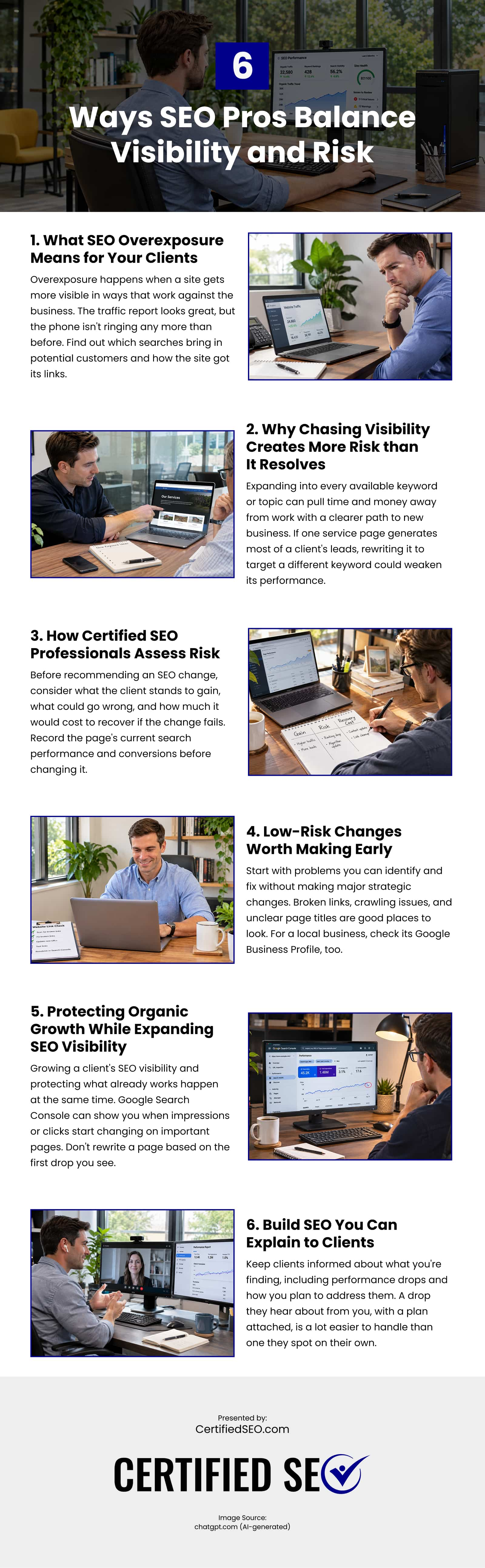
What SEO Overexposure Means for Your Clients
Overexposure happens when a site gets more visible in ways that work against the business. The traffic report looks great, but the phone isn’t ringing any more than before. This can happen when you target the wrong searches or use tactics Google treats as spam.
A family law firm, for example, might publish pages on loosely related topics ranging from celebrity divorces to general tax tips. Some may rank, but the people finding them aren’t looking for a family lawyer. Publish enough thin, off-topic pages like that, and it can eat up resources without attracting potential customers.
One of my favorite real-life examples was a lead in real estate that told me their previous SEO company had them ranking for a ton of #1s. I pulled a report of their top rankings, and the first one I saw was “how to exterminate bed bugs from rental properties.”
1 – They didn’t offer rentals.
2 – Even if they did, who in the world wants to read about bed bugs when shopping for real estate?
Backlinks introduce a different kind of risk. Buying links or trading them in bulk to influence rankings violates Google’s spam policies. Google’s systems may ignore those links, and serious violations can result in a manual action after it reviews the site. Any gains that depended on those links may disappear.
When you take over a client’s site, look beyond the amount of organic traffic it gets. Find out which searches are bringing in potential customers and how the site got its links. You need that context before deciding which parts of its existing visibility are worth building on.
Why Chasing Visibility Creates More Risk than It Resolves
Once you understand how a site is performing, the next challenge is deciding what deserves attention. A client may notice a competitor showing up for more searches and want the same reach. But expanding into every available keyword or topic can pull time and money away from work with a clearer path to new business.
Suppose a client’s main service pages already attract qualified visitors, but they could do a better job of converting visits into leads. Spending weeks building content around a new topic might increase traffic, yet leave that opportunity untouched. The better investment could be improving the pages the client already relies on.
Changes to successful pages carry their own risks. If one service page generates most of a client’s leads, rewriting it to target a different keyword could weaken its performance. Before making that change, consider whether the new search opportunity is worth risking the results the page already delivers.
A white-hat SEO course can give you a framework for making those decisions within Google’s guidelines and explaining the trade-offs to your clients.
How Certified SEO Professionals Assess Risk
Before recommending an SEO change, consider three things: what the client stands to gain, what could go wrong, and how much it would cost to recover if the change fails.
Start with the site’s current performance. If a service page generates a steady stream of leads, changing its content or targeting deserves more scrutiny than updating a page that gets little traffic and no conversions. Look at the page’s existing search visibility and business value before deciding how much risk to take.
Next, weigh the resources involved. Building a new content section might open up useful search opportunities, but it also takes time away from other work. Consider what the client would need to postpone to pursue it, and whether the potential return justifies the investment.
Before changing a page that already brings in leads, record its current search performance and conversions. After making the change, monitor those measures over the following weeks. If performance drops, look at the timing, affected pages, and search queries before deciding whether the change caused the problem.
You can’t avoid every risk. But you should understand the potential consequences, choose an appropriate level of risk, and have a plan for evaluating the results.
Low-Risk Changes Worth Making Early
Start with problems you can identify and fix without making major strategic changes. Broken links, crawling issues, and unclear page titles are good places to look. Fixing them can help search engines access and understand important pages without requiring you to rethink the site’s targeting or overhaul content that’s already performing well.
For a local business, check its Google Business Profile, too. Make sure the business information is accurate and that the profile reflects the services it offers. These fixes give you useful work to tackle while you evaluate bigger changes that carry more uncertainty.
Protecting Organic Growth While Expanding SEO Visibility
Growing a client’s SEO visibility and protecting what already works happen at the same time. As you build new pages, keep an eye on the ones already bringing in business.
Google Search Console can show you when impressions or clicks start changing on important pages. Pair that with your conversion data to see whether those changes are affecting leads or sales. If a page starts slipping, find out what’s happening before you put more time into something new.
Sometimes a page slips around the time Google updates its ranking systems. Rankings can move during and after an update. Don’t rewrite a page based on the first drop you see. Check whether it’s one page or the whole site, and look at which searches took the hit before deciding what needs to change.
Build SEO You Can Explain to Clients
Keep clients informed about what you’re finding, including performance drops and how you plan to address them. A drop they hear about from you, with a plan attached, is a lot easier to handle than one they spot on their own.
You should also be able to explain why you chose certain opportunities and passed on others. Those explanations help clients understand how you’re using their time and budget.
Video
Infographic